
Assessment and Feedback in Medical Education
Assessment
1. The ultimate goal of assessment is to improve learning and inform teaching, not merely to measure performance.
2. Traditional structured exams risk encouraging checklist-driven behavior over genuine patient-centred care, potentially prioritising examiner approval rather than real clinical competence.
3. Different types of assessment and their relationship to learning:
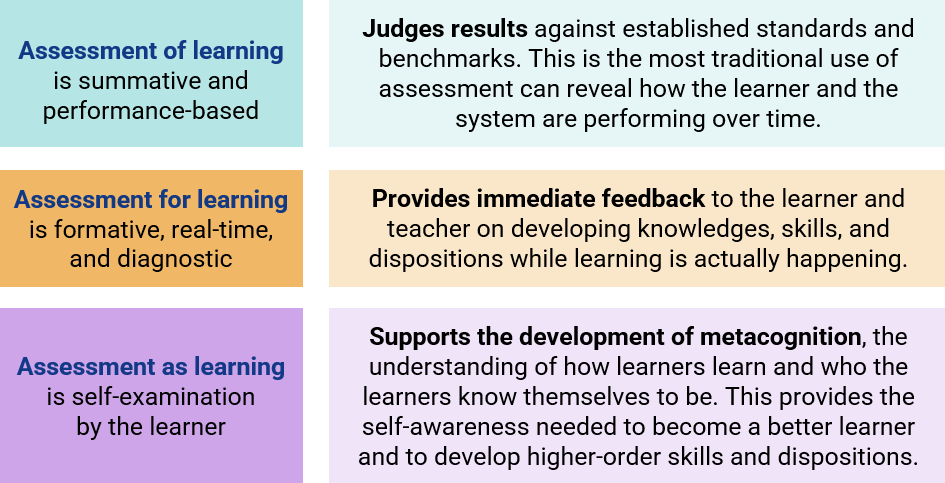
4. Competency-Based Medical Education Approach emphasises a qualitative, judgment-based assessment led by expert feedback rather than numeric scores, with active participation from the learner.
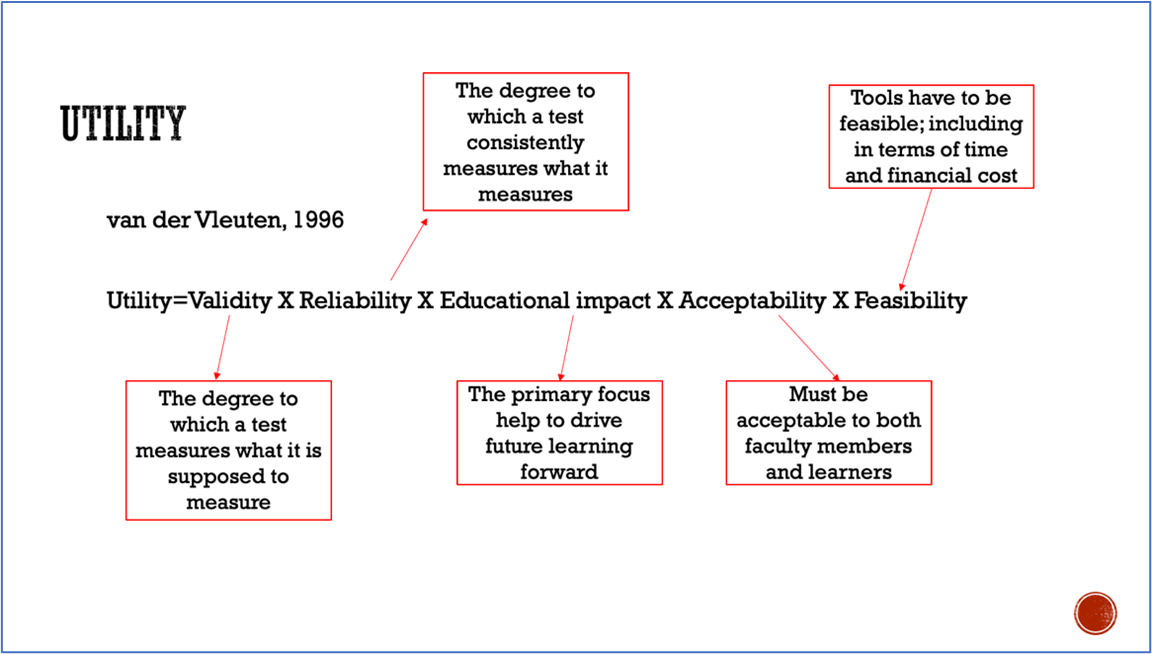
5. Continuous and Work-Based – Assessments should occur frequently and be embedded in daily clinical practice, reflecting real-world performance.
6. Assessment Tools must demonstrate validity, reliability, acceptability, educational impact, and cost-effectiveness to ensure credible and useful outcomes.
7. Assessments should drive future learning and enhance teaching; utility is conceptualised as:
Feedback
1. Feedback is an informed, objective, and non‑evaluative appraisal of performance aimed at improving skills, not judging personal worth.
2. The educator’s role extends beyond giving comments – they act as a facilitator and designer of meaningful, ongoing feedback sequences.
3. Feed-Forward Approach – Feedback becomes most valuable when it connects past performance with future improvement – turning assessment of learning into assessment for learning.
4. Feedback should: be actionable leading to positive impacts; prompt thinking and reflection; and encourage self-assessment and self-regulation.
5. Characteristics of Effective Feedback:
a. Specific: Focus on behavior, not generalization.
b. Actionable: Emphasize what could be done differently next time.
c. Timely: Delivered in a timely fashion and frequently.
d. Respectful: Communicate at least one concrete thing that the student did well in an assignment.
e. Non‑judgmental: Instead of using “You” statements, using “I” statements.
f. Self-regulation: Shifting from instructional messages to self-regulation.
6. Authentic Feedback in medicine should mirror real clinical practice, especially through direct observation (e.g., bedside rounds), demonstration, and clarifying dialogue.
7. Non-verbal Facilitative Strategies such as open body language, eye contact, supportive tone, and space for learner response and reflection facilitates effective feedback delivery.
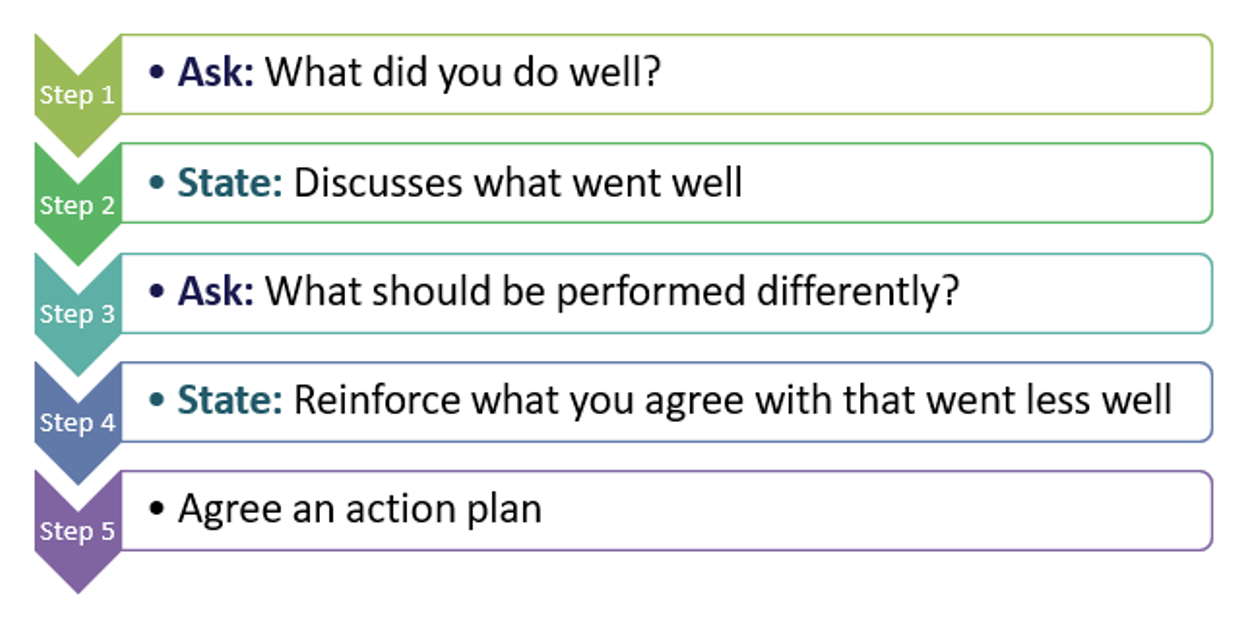
8. Pendleton’s Feedback Model (Pendleton et al., 1984) as an effective example:
References:
1. Carless D. & Chan, L. (2025, June 19). Effective Feedback in Small Group Learning [Seminar].
2. Pendleton D., Schofield T., Tate P., & Havelock P. (1984). The consultation: An approach to learning and teaching. Oxford University Press.
3. Zheng, B. Assessment and Feedback. 2022 September 19.
21 Sassoon Road, Pokfulam
Hong Kong SAR, China
Site Map
Follow BIMHSE
©2026 Bau Institute of Medical and Health Sciences Education, Li Ka Shing Faculty of Medicine, The University of Hong Kong. All right reserved.